Skip to content
Knox Jewelers

Knox Jewelers

A Fine Jewelry & Engagement Ring Blog

  • Home
  • Blog
  • Engagement Rings
  • Wedding Bands
  • Diamonds
  • Gemstones
  • Contact Us
Knox Jewelers

Tag: Knox Jewelers

A Guide to Diamond Inclusions and Blemishes

When carbon is exposed to extreme amounts of heat and pressure deep within the earth, the end result is the creation of a natural diamond. This strenuous process can leave a variety of characteristics upon a diamond crystal. Those features enclosed within the gemstone are referred to as inclusions and those left on the exterior are called blemishes. The Clarity Grade of a given diamond, one of the 4Cs, is determined by the presence or absence of these features.

Inclusions, or internal characteristics, will appear during the diamond’s formation. Inclusions will be unique for every single gemstones, essentially giving your diamond a fingerprint that allows you to recognize it apart from all others. There is a variety of inclusions, but the most common types we come across are clouds, feathers or mineral crystals enclosed within a gemstone.

Blemishes are characteristics confined to the exterior of a diamond. Blemishes can occur naturally, or be man-made resulting from the cutting process a faceted gemstone endures.

The severity of a stone’s inclusions and blemishes with determine its clarity grade. The number, size, relief, nature, and position of characteristics are taken into consideration when formulating a diamond’s clarity as it is recorded on its certification. No diamond will be perfectly pure, each gemstone will have some residue from its creations. However, the closer a diamond is to pure, the more rare and valuable it will become.

The GIA Diamond Clarity Scale has six categories, divided into a total of eleven specific grades.

  • Flawless (FL) – No inclusions and no blemished viable under 10x  magnification.
  • Internally Flawless (IF) – No inclusions viable under 10x  magnification.
  • Very, Very Slightly Included (VVS1 and VVS2) – Inclusions so slight they are difficult for skilled grader to see under 10x magnification.
  • Very Slightly Included (VS1 and VS2) – Inclusions are observed with effort under 10x magnification, but can be characterized as minor.
  • Slightly Included (SI1 and SI2) – Inclusions are noticeable under 10x  magnification.
  • Included (I1, I2, and I3) – Inclusions are obvious under 10x magnification which may affect transparency and brilliant.

Married to a Clarity Grade on a diamond grading report is a Plotting Diagram. This diagram displays important diamond characteristic information that was seen during the grading process. It is essential a map that tells a deeper story about your center stone. All of a diamond’s important inclusions and blemishes are documented and plotted. Since no two diamonds will have exactly the same diagram, this map will be important in identifying your gemstone if ever need be.

The plotting diagram will roughly resemble the shape and faceting pattern of your diamond. This helps you to understand where the marked characteristics are located on your gemstone. There will be two views shows of the diamond. Its crown view, or top, and pavilion view, or bottom.

In a plotting diagram, a certain color will correspond to each category of clarity characteristics. The colors and symbols used will help you understand the nature of each feature.

  • Red – Inclusions
  • Red and Green Combined – Inclusions that reach the surface of the diamond like; cavities, indented naturals, knots or laser drill holes.
  • Green – Natural Blemishes
  • Black – Extra Facets

The diagram below lists common characteristics as they would appear on a GIA plotting diagram. When characteristics are listed on a cert they will appear in order of importance to the clarity grade. If a large, centrally located feather is present in your stone, with few other impediments, it will be seen first in the list of inclusions. This feather most likely determined the final clarity grade of your diamond.

plotting-diagram-characteristics-321x1024 Unique Engagement Rings
GIA Plotting Diagram Key

Some clarity characteristics in a diamond may not be plotted on their certification if they are faint or are not important in determining the clarity grade of a gemstone. Featured that are not diagrammed will often be listed in the Comments section of the certification.

A GIA Plotting Diagram is an important tool in understanding the one-of-a-kind characteristics present in your perfect diamond. Keep in mind, that many characteristics are too small to be seen by anyone apart from a trained diamond grader. To your naked eye, two diamonds may look similar even though they drastically differ in grades. What is important is to choose a center stone that speaks to you with the quality standards you desire.

Here at Knox Jewelers, we want to assist you in finding your perfect center stone to feature in one of our custom created settings. You may not desire that gemstone to be a diamond, but if you do, we will walk you through the important features present in the diamond you choose. Contact us today to start the hunt for your perfect diamond, no matter the shape, size or color.
Author Katie MonsonPosted on July 31, 2016September 29, 2016Categories Unique Engagement RingsTags Blemishes, center stone, Clarity Grade, Custom Engagement Rings, Diamond Clarity, Diamond Feather, diamond grading, Diamond Inclusions, Diamond Plotting, Inclusions, knox custom creation, Knox Jewelers, Plotting DiagramLeave a comment on A Guide to Diamond Inclusions and Blemishes

Rubies and Custom Creation

Rubies have been a favored selection in jewelry for centuries. That tradition continues here at Knox Jewelers, were our patrons select this gemstone to embody love and passion in their custom creations. Ruby’s intense red color is desired for its beauty, rarity and the emotions it stirs.  In ancient Sanskrit, ruby is referred to as ratnaraj, or “king of precious stones.” This title has endured throughout the ages, as rubies have come to represent wealth, power and passion; hence their wide use in royal jewelry.

Apart from their chromatic allure, ruby is also a practical choice for jewelry worn on a daily basis, like an engagement ring or wedding band. Corundum, the mineral name for ruby and other shades of sapphire, is ranked 9 on the Mohs Scale, and is hard enough to withstand everyday wear and tear. This being said, it is not indestructible.

With our custom created engagement rings and wedding bands the possibilities are endless when considering incorporating a colored gemstone. Customizing your engagement ring with the inclusion of  a romantic ruby will make it a truly personalize, one-of-a-kind piece. Listed below are just some of the ways this crimson gemstone could be featured in your favorite ring settings and bands.

Solitaire Engagement rings

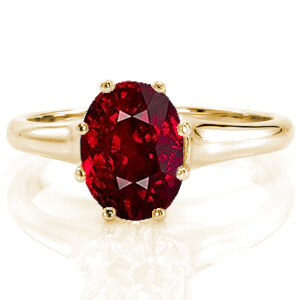
Choose a rich hued ruby in your preferred size and shape as the central focus in any of our custom solitaire rings. This intense center stone can stand alone and offer a bold, classic look.


Ruby-1 Unique Engagement Rings

Antique Engagement Rings

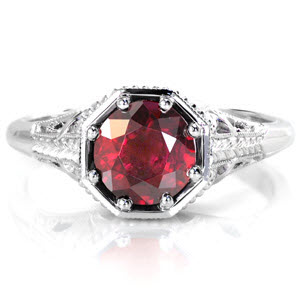
Select a vintage inspired setting with the addition of a ruby center stone to create a romantic engagement ring with ties to the past.


2822_1_image Unique Engagement Rings

Halo Engagement Rings

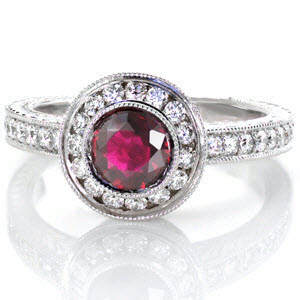
Add vintage character with a diamond halo design featuring a contrasting colored ruby center. The juxtaposition of diamonds and a scarlet center stone creates a dynamic engagement ring.


2626_1_image Unique Engagement Rings

Three Stone Engagement Rings

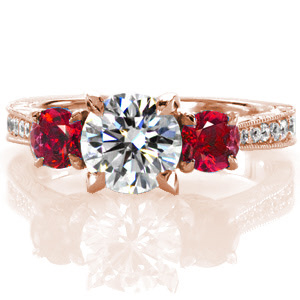
Get the best of both worlds with a custom engagement ring featuring a diamond center stone framed by saturated ruby accents. A three stone ring setting is the perfect way to incorporate gemstones while still selecting your perfect center diamond.


Ruby-4 Unique Engagement Rings
Knox Jewelers Custom Design Three Stone Vera


Wide Bands

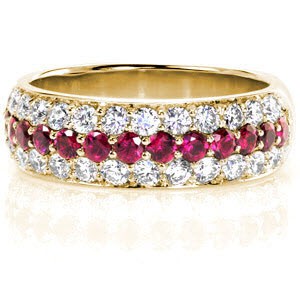
Our truly unique wide band rings offer the room to experiment with the addition of colored stones. Rubies with definitely stand out in a wide band design no matter where you decide to incorporate them. Their intense color plays well with any shade of gold and the gemstone comes to life when placed against dazzling diamonds.

2769_1_image_yellow Unique Engagement Rings

Wide Band Engagement Rings

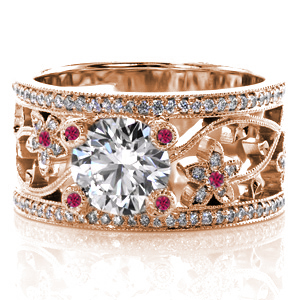
One of the most creative ways to include hints of rubies is their inclusion in a wide band engagement ring. Small colored stones could be scattered within any wide design. The combination of a brilliant center stone, side diamond and side rubies would create a true work of art.


Ruby-5 Unique Engagement Rings
Knox Jewelers Custom Design Freesia

Ladies Wedding Bands

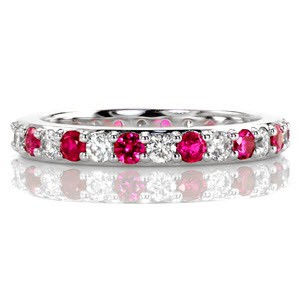
If a traditional diamond engagement ring is more your style, use the addition of your wedding band as the way to display colored rubies. Any of our custom wedding band style can be modified to feature rubies or other colored sapphires. Wedding bands are a great medium to display birthstones, anniversary stone or any colored stone with sentimental value.


2444_1_image Unique Engagement Rings

Gents Wedding Bands

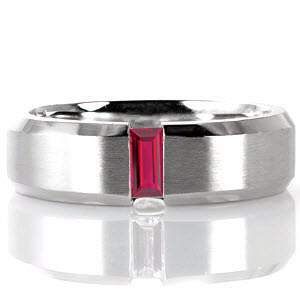
Men’s bands should not be forgotten when considering the addition of colored gemstones. A dynamic ruby could make your custom gent’s band a one-of-a-kind creation. Rubies bring to mind love and passion, the perfect addition to a wedding band.


Ruby-3 Unique Engagement Rings
Knox Jewelers Custom Design 1636

Contact Knox Jewelers today and let us help you select the perfect ruby to complete the ring or band of your dreams. Every ruby is unique, and we can search for any shape, size or saturation you have in mind. Make your custom engagement ring a truly one-of-a-kind creation with the addition of special colored gemstones.

Author Katie MonsonPosted on July 24, 2016September 29, 2016Categories Unique Engagement RingsTags colored gemstones, custom birthstone jewelry, Custom engagement ring, custom ruby solitaire, custom wedding band, july birthstone, knox, knox custom creation, Knox Jewelers, red gemstone, rubies, Ruby, ruby custom creationLeave a comment on Rubies and Custom Creation

July’s Custom Engagement Ring Spotlight

Spotlight-July-2 Unique Engagement Rings
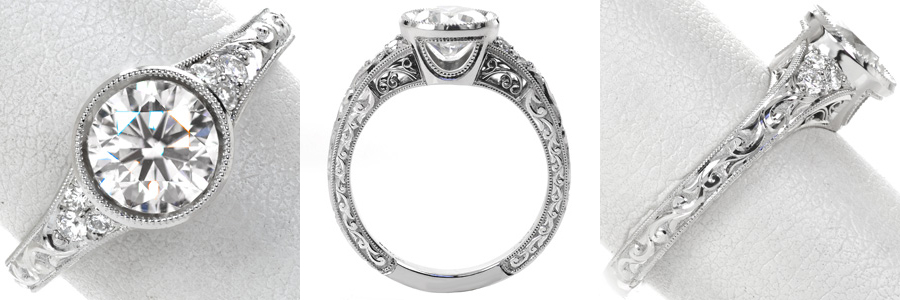
Knox Jewelers Custom Design 3267
Spotlight-July-1 Unique Engagement Rings
Alternative Views of Knox Jewelers Custom Design 3267

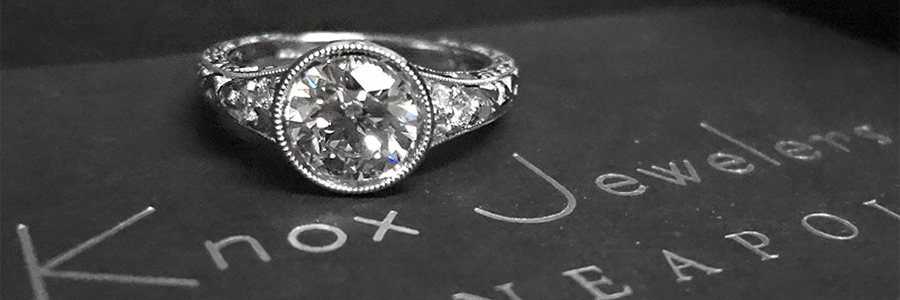
Here at Knox Jewelers, one of our new favorite custom created engagement ring is built around a breathtaking 1.30 carat round brilliant cut diamond set into a milgrain edged center bezel. The dynamic center stone is surrounded by a flattering flared band accented by bead-set diamond on either shoulder. Hand wrought filigree, hand cut relief engraving and a unique half moon keyhole add luxury to the ring’s profile view. Milgrained edges add a vintage inspired finishing touch to this ornate custom engagement ring. Design 3267 is a fully imaged blend of antique details and modern aesthetics, our favorite combination!

Spotlight-July-3 Unique Engagement Rings

Spotlight-July-4 Unique Engagement Rings
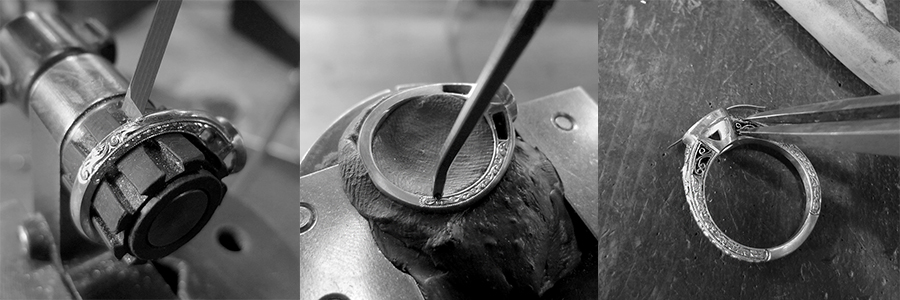
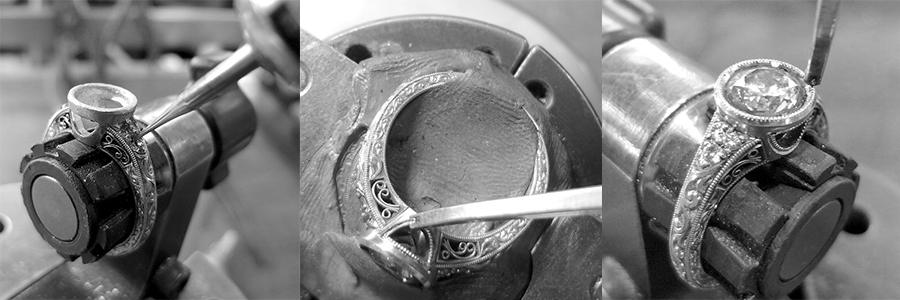
Production Photos for Knox Jewelers Custom Design 3267

Every ring at Knox Jewelers is made by hand from the ground up. We are extremely proud of our in-house design team that works tirelessly to add even the smallest details to your perfect custom engagement ring. We document the creation of our custom piece with jeweler’s eye view production photos, allowing you the chance to see your beautiful ring come to life.

This magnificent design can be recreated to accommodate any type, shape, or size center stones. Contact Knox Jewelers today to custom tailor this design to your preferred precious metal and central gemstone selection to create your own one-of-a-kind engagement ring!

Spotlight-July-5 Unique Engagement Rings
Final Production Photo for Knox Jewelers Custom Design 3267
Author Katie MonsonPosted on July 18, 2016September 29, 2016Categories Unique Engagement RingsTags Antique Engagement Rings, custom, custom created, Custom Creation, Custom engagement ring, Custom Engagement Rings, custom spotlight, Diamond Engagement Ring, Filigree Engagement Rings, hand engraved engagement rings, knox custom creation, Knox Jewelers, Unique Engagement Rings, Vintage Engagement Rings, White GoldLeave a comment on July’s Custom Engagement Ring Spotlight

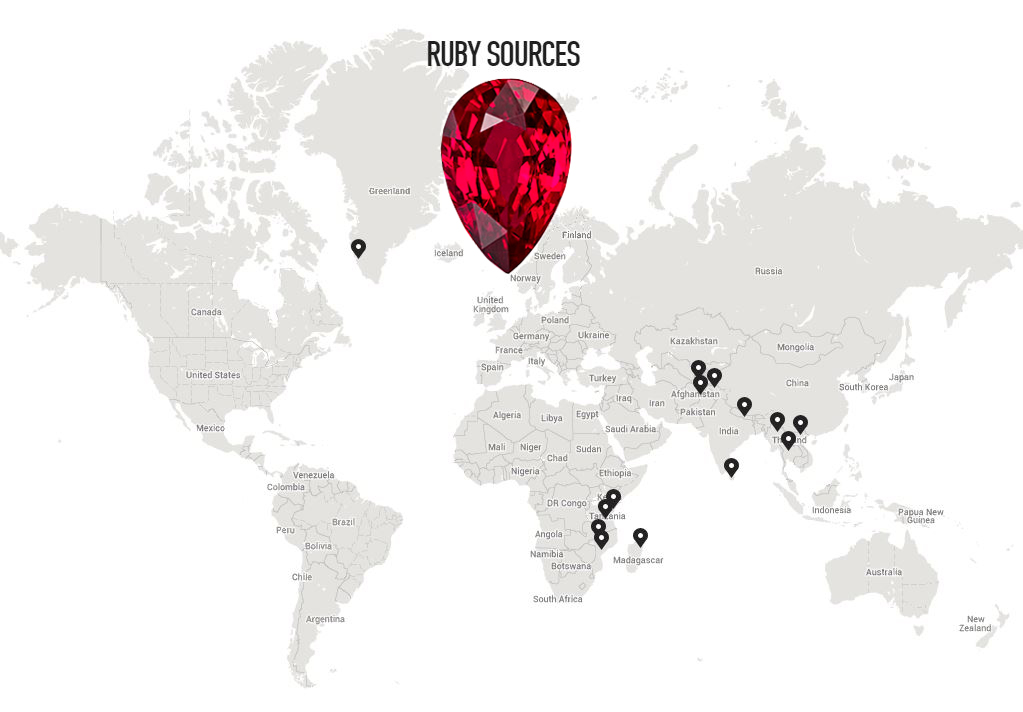
Where is Ruby Found?

Ruby-Map Unique Engagement Rings

  • Greenland – Deposits found in Greenland are not yet producing for commercial use but they are considered to have great potential.
  • Mozambique – In the past, most ruby mining has been done by solitary miners in Mozambique. Now the mining company Gem Fields is partnering with the country’s government to regulate the gemstone mining here.
  • Malawi – Rubies as well as warm colored pink, orange and purple sapphires can be found in the Chimwadzulu Hills of Malawi.
  • Tanzania – Tanzania is an important mining country for many gemstones including ruby.
  • Kenya – The South Tsavo National Park in Kenya holds the fully mechanized Rockland Ruby Mine.
  • Madagascar – Andilamena is an important ruby producing area on the island of Madagascar.
  • Sri Lanka – Sir Lanka is known for is sapphire and ruby production, mostly from alluvial (secondary water) deposits.
  • Thailand – The ruby deposits in Thailand were the major source of the gemstone in the 1980s, though they are no longer producing today, the country is still major cutting and trading site for the gem.
  • Vietnam – The new mining source for rubies, the Luc Yen area is known for its high quality gemstones.
  • Myanmar – Myanmar has been known for its mesmerizing rubies for centuries. The Mogok Valley region may be one of the most famous ruby deposits to date. They are know for their deeply saturated, beautiful gemstones.
  • Nepal – Some rubies have been found in marble deposits in Nepal, but no significant pockets yet.
  • Pakistan – Most ruby mining in Pakistan takes place near the famous Hunza Valley.
  • Afghanistan – The ruby mines in Jegdalek, Afghanistan are often left inactive for periods of time due to war, lack of security and government regulations.
  • Tajikistan – Some rubies from Tajikistan carry rare intense red fluorescence that can even be noticed in daylight.

If you are lucky enough to hold the king of gemstones, ruby, as your birthstone, let us at Knox Jewelers help you custom create a one-of-a-kind piece to showcase this beautiful color saturated gemstone. Ruby is one of the most significant gemstones in history, loved for its intense color throughout the centuries. Any custom piece of jewelry could be tailored to incorporate this remarkable crimson birthstone. The possibility are endless with such a passionate and colorful mineral. A Knox Jewelers custom created piece, featuring a beautiful ruby is the perfect way to celebrate any occasion falling within the month. Contact us today and let’s get started. We can always search our cutters’ inventory for your perfect gemstone, or we have a selection of incredible rubies already available just waiting to be transformed!

Author Katie MonsonPosted on July 10, 2016September 29, 2016Categories Unique Engagement RingsTags Birthstone, custom birthstone jewelry, Custom engagement ring, custom jewelry, found, july birthstone, knox custom creation, Knox Jewelers, Ruby, ruby foundLeave a comment on Where is Ruby Found?

The Creation of Laboratory Diamonds

minneapolis-engagement-rings Unique Engagement Rings
Knox Jewelers Custom Engagement Rings

Knox Jewelers will now be carrying Lab Created Diamonds as center stone options to feature in our custom engagement rings. But before you decide if this natural diamond alternative is right for you, you may like a a brief explanation on how these man-made diamonds are created.

Created diamonds are grown in a laboratory and will have the same basic crystal structure and chemical composition as natural diamonds that were formed over millions of years, deep underground. In-depth research and development of a man-made diamond  has been in progress for the past thirty years, but only recently has there been the successful creation of quality crystals, large enough for use in jewelry.

A laboratory created diamond is a gemstone produced by artificial means in a control process rather than natural diamonds, which are created by geological processes deep inside the earth. Lab created diamonds are often designated as either a High Pressure High Temperature (HPHT) diamond or Chemical Vapor Deposition (CVD) diamond, depending on which process was utilized in their formation. HPHT and CVD are the two most common production methods currently in practice for created diamonds. These laboratory gemstones are made from pure crystallized carbon, the same structural material as earth mined diamonds.

Ever since the early nineteenth century there has been interested and experimentation in producing a diamond, but the exact process of duplicating the extreme pressure and temperature which natural diamonds are formed under remained a mystery. General Electric, in 1955, took the first steps in technological development and created the first laboratory diamonds, though they were small and only usable in industrial settings. Ever since then, the distinct processes that create a lab diamond have only become more refined. The end result, a fully developed laboratory diamond, is now available to feature as the center stone in a one-of-kind Knox engagement ring.

High Pressure High Temperature (HPHT) Lab Created Diamond

The HPHT process is used to recreate the conditions of a natural diamond’s birth, where they form close to 150-200 km below the Earth’s surface. This growth process is slow and well-controlled. This steady growth is essential for creating high quality laboratory diamonds. The creation of a gem-quality stone close to one carat will takes about three days to crystallize.

Most HPHT diamonds are created the same way, though there are three main press designs used to supply the pressure and temperature necessary to produce a crystal. Currently the belt press, the cubic press and the split-sphere (BARS) press are all actively producing gem-quality stones.

A diamond seed is placed at the bottom of a press. This seed may be of natural or synthetic origin, and will be close to the thickness of a fingernail. The internal part of press is heated by a tubular, graphite heater.  This generates temperatures above 1400°C, replicating deep underground, and melts the solvent material that has been placed in the press.  The molten material dissolves and mixes with a high level carbon source, which is then transported to the diamond seeds and grows, forming a large synthetic diamond.

Chemical Vapor Deposition (CVD) Lab Created Diamond

Chemical vapor deposition is a growth method where a diamond can be created from only a hydrocarbon gas mixture. Unlike HPHT gemstones, CVD diamonds do not require high pressures to form. This process is comparatively more simple than HPHT, with less necessary equipment and materials.

The CVD process involves feeding varying amounts of gases into a chamber and energizing them. The gases always include a carbon source, typically methane, and hydrogen. Hydrogen is essential because it selectively etches off non-diamond carbon. The gases are ionized with heat into chemically active radicals that collect to form diamond crystals.

Both of these processes form beautiful man-made diamonds that are faceting and waiting to be selected.

If a lab created diamond option is in your interest, please contact us today to inquire on the available selection of gemstones. We can search our current collection for the perfect grown diamond option to become the finishing touch to your beautiful handcrafted piece.

Author Katie MonsonPosted on July 3, 2016July 4, 2016Categories Unique Engagement RingsTags center stone, created diamond, Custom Engagement Rings, CVD, diamond options, HPHT, knox custom, Knox Jewelers, lab created, Lab Diamond, process lab diamondLeave a comment on The Creation of Laboratory Diamonds

Posts navigation

Previous page Page 1 … Page 7 Page 8 Page 9 … Page 15 Next page

Recent Posts

  • August’s Custom Engagement Ring Spotlight
  • Gemstone Spotlight
  • July’s Custom Engagement Ring Spotlight
  • Gemstone Spotlight
  • June’s Custom Engagement Ring Spotlight

Categories

  • Buying a Wedding Ring
  • Cushion Cut Rings
  • Custom Creation
  • Custom In Progress
  • Diamonds
  • Gemstones
  • Jewelry
  • Micro Pave Engagement Rings
  • Ring Metal Info
  • Ring Spotlight
  • Sapphire Engagement Rings
  • Setting and Styles
  • Top Ten List
  • Unique Engagement Rings
  • Unique Wedding Rings
  • Whats New at Knox

Recent Comments

  • Tony Stanley on Can a diamond become discolored from well water?
  • admin on Can a diamond become discolored from well water?
  • Ahlyssa on Can a diamond become discolored from well water?
  • admin on How often will my white gold ring need to be rhodium plated?
  • Shelagh on How often will my white gold ring need to be rhodium plated?

Get Posts Straight to Your Email

  • Home
  • Blog
  • Engagement Rings
  • Wedding Bands
  • Diamonds
  • Gemstones
  • Contact Us
Knox Jewelers Proudly powered by WordPress